logo
Courses
    logo
  • Courses
  • Corporate Training
  • Testimonials
logo

Address

Suite 610 - The Business Center, Opp to Burjuman Centre, Adjacent to Burjuman Metro Station Exit 4, Khalid Bin Walid Street. P.O.Box: 94743 Dubai, UAE

Categories

  • Human Resources
  • Finance & Accounting
  • Project Management
  • Logistics & Supply Chain
  • Data & Business Intelligence

Quick Links

  • About Us
  • Blog
  • Corporate Training
  • Contact Us
  • LP Talks
  • Student Login
  • Privacy Policy
  • Terms and Conditions
  • Refund Policy
  • Pay Now

Contact us

  • info@learnerspoint.org
  • +971 (04) 4038000
  • 800SKILL(75455)
  • +1 347 637 6133
  • +44 20 4524 4199
  • +966112036111
  • +91 97462 22034
  • +971566335515

Stay connected

Privacy Policy

CSCP Certification

CSCP professional training in 24 hours

Globally recognised CPD-UK-accredited certification

11 modules & Copilot for digital risk mitigation strategies

Industry simulations to ace complex global logistics

Flexible class schedules & payment options

4.9/5

4985 Enrolled

Overview

What you will be learning in this course:

  • Explore key SCM concepts to optimize operational efficiency and customer satisfaction
  • Hands-on industry simulations to design and evaluate real-world supply chain networks
  • Develop skills in transportation optimization and cost-effective routing for supply chains
  • Engage in risk management exercises to handle global supply chain disruptions
  • Work on advanced SCM strategies, including Lean, Agile, and Resilient model
  • Explore various Copilot applications for supply chain analysis and smarter decision-making

Learning Objectives

After finishing the course, you will be able to:

  • 1

    Understand core supply chain management principles and frameworks, including the roles of logistics, procurement, and distribution

  • 2

    Design and evaluate effective supply chain networks, considering key factors like cost optimization, service levels, and flexibility

  • 3

    Apply risk management strategies to identify and mitigate supply chain risks, ensuring resilience in a rapidly changing global market

  • 4

    Optimize transportation and distribution channels, leveraging practical simulations to manage costs and improve routing efficiency

  • 5

    Incorporate sustainability practices into supply chain strategies, focusing on long-term success and integrating modern technologies like IoT and blockchain

  • objective-image

    Ready to get started?

  • Prerequisites

    To attend the CSCP Certification program, the eligibility requirements are as follows:

    • Bachelor's degree or equivalent, plus two years of related business experience
    • CPIM, CFPIM, CIRM, or CPM designation plus two years of related business experience
    • Five years of related business experience

    Overall ratings by our students

    Upcoming sessions

    Our Expert Instructors

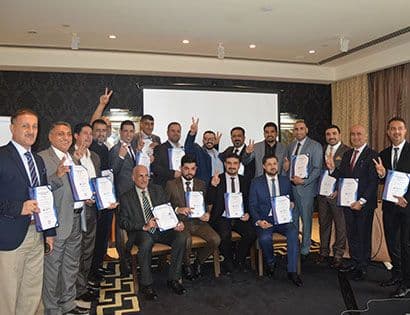
    We, at Learners Point, take immense pride in our teaching methods and instructors. Our instructors are some of the best experts from their fields and employ a practical approach to learning. Many of them are globally recognised and have a diverse set of experience in their field of expertise. You are always sure to have the best in the industry as your teachers who are ready to guide you at every step and make the experience informative yet enjoyable.  Apart from the focus on learning your chosen course, our instructors also encourage students to develop communication skills and interpersonal skills necessary to excel in the practical world.

    Our cutting edge teaching methods make every program an immersive and productive experience for the learners. Our learning methods are research-driven and are continuously updated to stay relevant to present times as well as the future. You will enjoy practical applications of everything learned through theory and regular mock examinations to help monitor your progress. Our courses are led by an instructor in a classroom setup and we do offer online high-quality sessions as well for individuals. We also monitor the training sessions with a progress tracker to maintain high standards of instruction and ethics.

    Our Expert Instructors

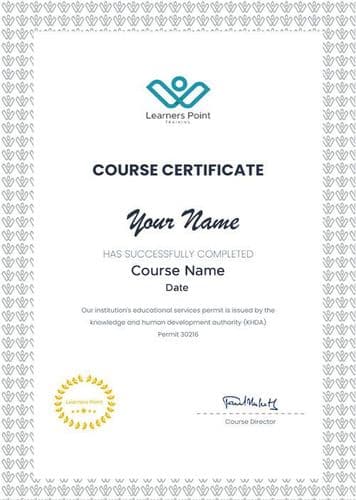
    Learners Point Certificate

    Earn a Course Completion Certificate, an official Learners Point credential that confirms that you have successfully completed a course with us.

    Certifcate-Image0

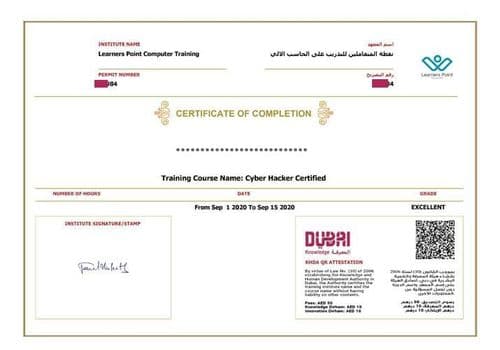
    KHDA Certificate

    Earn a KHDA attested Course Certificate. The Knowledge and Human Development Authority (KHDA) is the educational quality assurance and regulatory authority of the Government of Dubai, United Arab Emirates.

    Certifcate-Image1

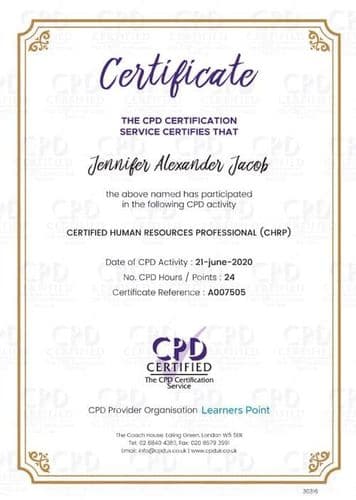
    CPD Certification

    Earn a globally recognized CPD UK Certification with professional credit points. This certificate can be attested by The UAE Ministry of Foreign Affairs and International Cooperation for UAE visa issuance.

    Certifcate-Image2

    Related courses

    Curriculum

    • Understanding the fundamental SCM terms and frameworks
    • Role of SCM in optimizing operational efficiency and customer satisfaction
    • Introduction to the concept of demand vs. supply in the supply chain

    Copilot Integration: Use Copilot to summarize core SCM concepts, generate glossary definitions for supply chain terminology, and compare demand-driven vs. supply-driven models through quick scenario prompts.

    • How to evaluate a company’s SCM performance by analyzing its structure and processes
    • Hands-on practice with making supply chain decisions using real-world data
    • Simulating key decision points like inventory management and supplier selection in a controlled setting

    Copilot Integration: Use Copilot to analyze sample supply chain data, identify performance gaps, generate supplier comparison summaries, and assist in evaluating inventory-related decision options.

    • Mapping a supply chain network, considering factors like cost, speed, and flexibility
    • Use of basic SCM tools to build and execute a small-scale supply chain network
    • Identification of potential bottlenecks in the supply chain and finding solutions

    Copilot Integration: Use Copilot to help map supply chain activities, suggest possible bottlenecks based on workflow inputs, and recommend execution improvements for cost, speed, and flexibility.

    • Understanding the importance of communication and coordination in SCM
    • Insights from the case study and simulation on successful SCM strategies
    • Discussing how disruptions affect the supply chain and brainstorming solutions

    Copilot Integration: Use Copilot to generate discussion prompts, summarise team observations from the simulation, and help document lessons learned from coordination and disruption-response activities.

    • How to optimize a supply chain network using key design principles (e.g., cost minimization, service optimization)
    • Introduction to SCM challenges like demand fluctuations and supply chain disruptions
    • The role of transportation and warehouse management in effective SCM

    Copilot Integration: Use Copilot to compare network design alternatives, generate optimization ideas, and assist participants in analysing trade-offs between cost, service levels, warehousing, and transportation decisions.

    • Understanding the critical role of distribution channels in SCM efficiency
    • Using simulations to manage transportation costs and optimize routing
    • Evaluating the impact of transportation decisions on overall supply chain performance

    Copilot Integration: Use Copilot to evaluate routing options, generate transportation scenario comparisons, summarize distribution channel effectiveness, and support transportation cost analysis exercises.

    • Hands-on training in using SCM software tools for planning and optimization
    • Applying theoretical principles in real-time scenarios through the execution of supply chain strategies
    • Identifying the strengths and weaknesses of supply chain plans through analysis

    Copilot Integration: Use Copilot to interpret SCM planning outputs, generate execution checklists, assist in scenario-based planning decisions, and summarize strengths and weaknesses of different supply chain plans.

    • Discuss the impact of global events on supply chains, such as natural disasters, pandemics, or geopolitical risks
    • Understanding the ongoing trends in SCM, such as digital transformation and sustainability
    • Exploring the challenges faced by SCM professionals in an increasingly complex and interconnected world

    Copilot Integration: Use Copilot to research and summarize recent supply chain disruption themes, compare sustainability trends, and generate insights on digital transformation challenges affecting SCM professionals.

    • Exploring advanced SCM models: Lean, Agile, and Resilient
    • Identifying and mitigating potential risks in global supply chains
    • The role of digital technologies (AI, IoT, and Blockchain) in transforming SCM strategies

    Copilot Integration: Use Copilot to compare Lean, Agile, and Resilient models, identify strategic risks, generate mitigation ideas, and explain how AI, IoT, and Blockchain support modern supply chain strategy.

    • Understanding how businesses respond to supply chain disruptions
    • Using simulations to create and test risk management strategies in SCM
    • Evaluating real-world examples of companies who have successfully navigated supply chain crises

    Copilot Integration: Use Copilot to simulate disruption-response options, generate crisis-response scenarios, summarize company case examples, and support risk strategy evaluation during the simulation.

    • Developing risk management frameworks to anticipate and mitigate risks
    • Applying strategies for managing supply chain disruptions in real time
    • Incorporating sustainability practices into supply chain strategies for long-term success

    Copilot Integration: Use Copilot to draft risk management frameworks, generate real-time response actions, and suggest sustainability improvement measures aligned with long-term supply chain resilience.

    Frequently asked questions

    CSCP Certification or Certified Supply Chain Professional Course is the highest credential and the prestigious qualification for experts in Supply Chain Management.

    It is important for professionals in the supply chain field because it validates their expertise in end-to-end supply chain management, including planning, sourcing, production, logistics and returns.

    The eligibility requirements for CSCP course in Dubai are as follows:

    1)Bachelor's degree or equivalent, plus 2 years of related business experience
    2)CPIM, CFPIM, CIRM, or CPM designation plus 2 years of related business experience
    3)5 years of related business experience

    Our CSCP certification training cover 8 major topics divided into 8 modules with the Automation Sandbox. These are as follows:

    1)Supply Chains, Demand Management and Forecasting
    2)Global Supply Chain Networks
    3)Sourcing Products and Services
    4)Internal Operations and Inventory
    5)Forward and Reverse Logistics
    6)Supply Chain Relationships
    7)Supply Chain Risk
    8)Optimization, Sustainability and Technology
    9)Automation Sandbox

    The CSCP certification is ideal for supply chain professionals, managers, and directors looking to advance their careers in global supply chain management. Experts working in domains like operations, procurement, and logistics can apply for this certification.

    The pattern of CSCP Certification exam is computer-based test including multiple choice questions. This exam consists of 150 questions and the duration is 3.5 hours. You need to score 300 and above to pass the examination.

    The CSCP training is designed for professionals in the field of supply chain management to advance their skills, and knowledge and boost career growth. Before enrolling in this course, an individual can get a complete overview by going through the benefits and career opportunities of the CSCP training such as increased earning potential, enhanced supply chain knowledge, networking opportunities etc.

    Individuals learn a range of key concepts in supply chain management through the CSCP course. These include principles of supply chain operations, planning, logistics, strategy, design, and compliance.

    The validity of the CSCP certification is 5 years. To maintain this credential, one must earn and submit 75 professional development maintenance points every 5 years.

    Some of the in-demand job roles available for our CSCP-certified professionals includes:

    1. Supply Chain Manager
    2. Logistics Manager
    3. Materials Manager
    4. Buyer Planner
    5. Inventory Management

    Absolutely. Our CSCP(Certified Supply Chain Professional) training is designed for working professionals with flexible formats. We provide our extensive program across different locations.

    • CSCP Certification in Dubai
    • CSCP Certification in Saudi Arabia
    • CSCP Certification in Bahrain
    • CSCP Certification in Kuwait
    • CSCP Certification in Oman
    • CSCP Certification in Qatar

    Yes. The CSCP Certification course at Learners Point includes the application of AI tools, namely Copilot, as part of the curriculum. By the end of each module, participants use Copilot applications to understand AI-assisted analysis, decision support, and strategic thinking. This helps learners build the digital capabilities needed to improve execution across key supply chain functions.

    Do you want to learn more about Learners Point Academy?

    • Learn more about courses
    • Understand about our methodology
    • Let’s talk about Corporate trainings
    • Anything else that you want to know, we are here for you!

    Let's chat!

    • Afghanistan+93
    • Albania+355
    • Algeria+213
    • Andorra+376
    • Angola+244
    • Antigua and Barbuda+1268
    • Argentina+54
    • Armenia+374
    • Aruba+297
    • Australia+61
    • Austria+43
    • Azerbaijan+994
    • Bahamas+1242
    • Bahrain+973
    • Bangladesh+880
    • Barbados+1246
    • Belarus+375
    • Belgium+32
    • Belize+501
    • Benin+229
    • Bhutan+975
    • Bolivia+591
    • Bosnia and Herzegovina+387
    • Botswana+267
    • Brazil+55
    • British Indian Ocean Territory+246
    • Brunei+673
    • Bulgaria+359
    • Burkina Faso+226
    • Burundi+257
    • Cambodia+855
    • Cameroon+237
    • Canada+1
    • Cape Verde+238
    • Caribbean Netherlands+599
    • Cayman Islands+1
    • Central African Republic+236
    • Chad+235
    • Chile+56
    • China+86
    • Colombia+57
    • Comoros+269
    • Congo+243
    • Congo+242
    • Costa Rica+506
    • Côte d'Ivoire+225
    • Croatia+385
    • Cuba+53
    • Curaçao+599
    • Cyprus+357
    • Czech Republic+420
    • Denmark+45
    • Djibouti+253
    • Dominica+1767
    • Dominican Republic+1
    • Ecuador+593
    • Egypt+20
    • El Salvador+503
    • Equatorial Guinea+240
    • Eritrea+291
    • Estonia+372
    • Ethiopia+251
    • Fiji+679
    • Finland+358
    • France+33
    • French Guiana+594
    • French Polynesia+689
    • Gabon+241
    • Gambia+220
    • Georgia+995
    • Germany+49
    • Ghana+233
    • Greece+30
    • Greenland+299
    • Grenada+1473
    • Guadeloupe+590
    • Guam+1671
    • Guatemala+502
    • Guinea+224
    • Guinea-Bissau+245
    • Guyana+592
    • Haiti+509
    • Honduras+504
    • Hong Kong+852
    • Hungary+36
    • Iceland+354
    • India+91
    • Indonesia+62
    • Iran+98
    • Iraq+964
    • Ireland+353
    • Israel+972
    • Italy+39
    • Jamaica+1876
    • Japan+81
    • Jordan+962
    • Kazakhstan+7
    • Kenya+254
    • Kiribati+686
    • Kosovo+383
    • Kuwait+965
    • Kyrgyzstan+996
    • Laos+856
    • Latvia+371
    • Lebanon+961
    • Lesotho+266
    • Liberia+231
    • Libya+218
    • Liechtenstein+423
    • Lithuania+370
    • Luxembourg+352
    • Macau+853
    • Macedonia+389
    • Madagascar+261
    • Malawi+265
    • Malaysia+60
    • Maldives+960
    • Mali+223
    • Malta+356
    • Marshall Islands+692
    • Martinique+596
    • Mauritania+222
    • Mauritius+230
    • Mexico+52
    • Micronesia+691
    • Moldova+373
    • Monaco+377
    • Mongolia+976
    • Montenegro+382
    • Morocco+212
    • Mozambique+258
    • Myanmar+95
    • Namibia+264
    • Nauru+674
    • Nepal+977
    • Netherlands+31
    • New Caledonia+687
    • New Zealand+64
    • Nicaragua+505
    • Niger+227
    • Nigeria+234
    • North Korea+850
    • Norway+47
    • Oman+968
    • Pakistan+92
    • Palau+680
    • Palestine+970
    • Panama+507
    • Papua New Guinea+675
    • Paraguay+595
    • Peru+51
    • Philippines+63
    • Poland+48
    • Portugal+351
    • Puerto Rico+1
    • Qatar+974
    • Réunion+262
    • Romania+40
    • Russia+7
    • Rwanda+250
    • Saint Kitts and Nevis+1869
    • Saint Lucia+1758
    • Saint Vincent and the Grenadines+1784
    • Samoa+685
    • San Marino+378
    • São Tomé and Príncipe+239
    • Saudi Arabia+966
    • Senegal+221
    • Serbia+381
    • Seychelles+248
    • Sierra Leone+232
    • Singapore+65
    • Slovakia+421
    • Slovenia+386
    • Solomon Islands+677
    • Somalia+252
    • South Africa+27
    • South Korea+82
    • South Sudan+211
    • Spain+34
    • Sri Lanka+94
    • Sudan+249
    • Suriname+597
    • Swaziland+268
    • Sweden+46
    • Switzerland+41
    • Syria+963
    • Taiwan+886
    • Tajikistan+992
    • Tanzania+255
    • Thailand+66
    • Timor-Leste+670
    • Togo+228
    • Tonga+676
    • Trinidad and Tobago+1868
    • Tunisia+216
    • Turkey+90
    • Turkmenistan+993
    • Tuvalu+688
    • Uganda+256
    • Ukraine+380
    • United Arab Emirates+971
    • United Kingdom+44
    • United States+1
    • Uruguay+598
    • Uzbekistan+998
    • Vanuatu+678
    • Vatican City+39
    • Venezuela+58
    • Vietnam+84
    • Yemen+967
    • Zambia+260
    • Zimbabwe+263

    Learn now, pay later

    Dive into your course now and pay in installments